Robert Szeleney@robert.szeleney
GPS / Avionik
AeroTracker AeroTracker
≈ € 1.069,00
Obwohl die DA40NG mit einem vollwertigen Traffic Advisory System (TAS) ausgestattet ist, wird in Österreich (und anderen europäischen Ländern) häufig FLARM verwendet, vor allem von Segelflugzeugen. Ein TAS sieht nur Luftfahrzeuge mit Transponder, daher wird ein großer Teil der Segelflieger, Ultraleichtflugzeuge und Paragleiter in deiner Umgebung dort nie auftauchen.
Genau hier kommt der AeroTracker ins Spiel. In Kombination mit meinem primären Flug-iPad ist er das beste Gerät, das man bekommen kann, um FLARM/ADSB und anderen schwer erkennbaren Verkehr zu erfassen. Von allen Geräten, die ich getestet habe, liefert der AeroTracker mit Abstand die besten Ergebnisse, und seine LTE-Verbindung ist außergewöhnlich – sogar in großen Höhen.
Vergleich mit PowerFLARM
Ich habe auch das PowerFLARM Flex ausprobiert, war damit aber überhaupt nicht zufrieden. Ich habe beide Geräte parallel genutzt (und auch einzeln, um sicherzugehen, dass sie sich nicht gegenseitig stören). Mehrmals hat das PowerFLARM andere Luftfahrzeuge entweder komplett übersehen oder nicht aktualisiert, und die Abdeckung und Reichweite insgesamt waren unbefriedigend. Bisher hat der AeroTracker noch kein einziges ADS-B-Luftfahrzeug verpasst, das das integrierte TAS angezeigt hat.Was der AeroTracker macht
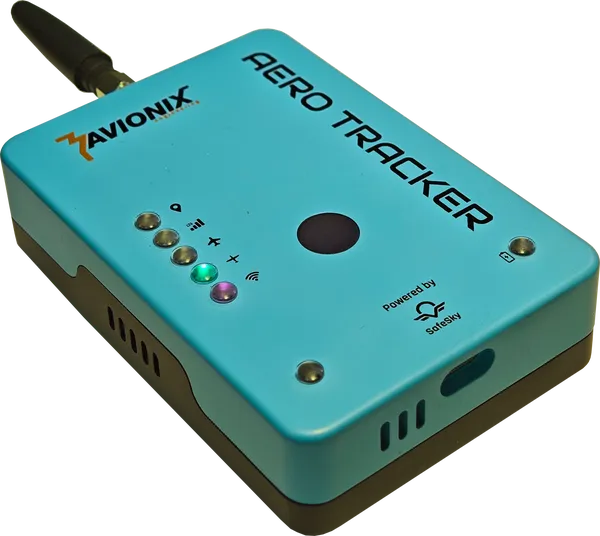
Der AeroTracker ist ein kleines, tragbares eConspicuity-Gerät. Er erfüllt zwei Aufgaben: Er macht dich für andere Luftraumnutzer sichtbar und zeigt dir, wer sonst noch unterwegs ist. Dafür nutzt er zwei unabhängige Ebenen, die sich gegenseitig ergänzen.Air-to-Air (direkter Funk, kein Netz erforderlich)
Empfängt: ADS-B, Mode S und optional FLARM Sendet und empfängt: ADS-L, OGN und FANET Mode-S-Ziele haben keine Positionsdaten und werden daher ohne Peilung angezeigt, die Entfernung wird anhand der Signalstärke geschätzt FLARM-Empfang direkt von anderen Luftfahrzeugen erfordert eine optionale SoftwarelizenzLTE (über die eingebaute SIM-Karte und das SafeSky-Netzwerk)
Fügt Verkehr aus mehr als 30 Quellen hinzu, darunter SafeSky-Nutzer, FLARM (über Bodenstationen), Mode S per Multilateration (MLAT), PilotAware, Navigations-Apps, Paragleiter-Geräte und Drohnen Erfordert ein SafeSky-Abo Wenn das iPad ebenfalls eine Mobilfunkverbindung hat, führt SafeSky beide Datenströme zusammen – für zusätzliche Abdeckung und Redundanz Das Gerät entspricht dem ADS-L-Standard der EASA, dem aufkommenden europäischen Standard für eConspicuity im unkontrollierten Luftraum.Hardware
Akku-Version: 4.000-mAh-Akku, etwa 10 Stunden Laufzeit Master-On-Version: kein Akku; Stromversorgung über USB-C (5–15 V), schaltet sich mit dem Bordstrom ein und aus Preis: ab ca. 750–860 € (exkl. MwSt.), je nach Version und ob die FLARM-Lizenz enthalten istSetup
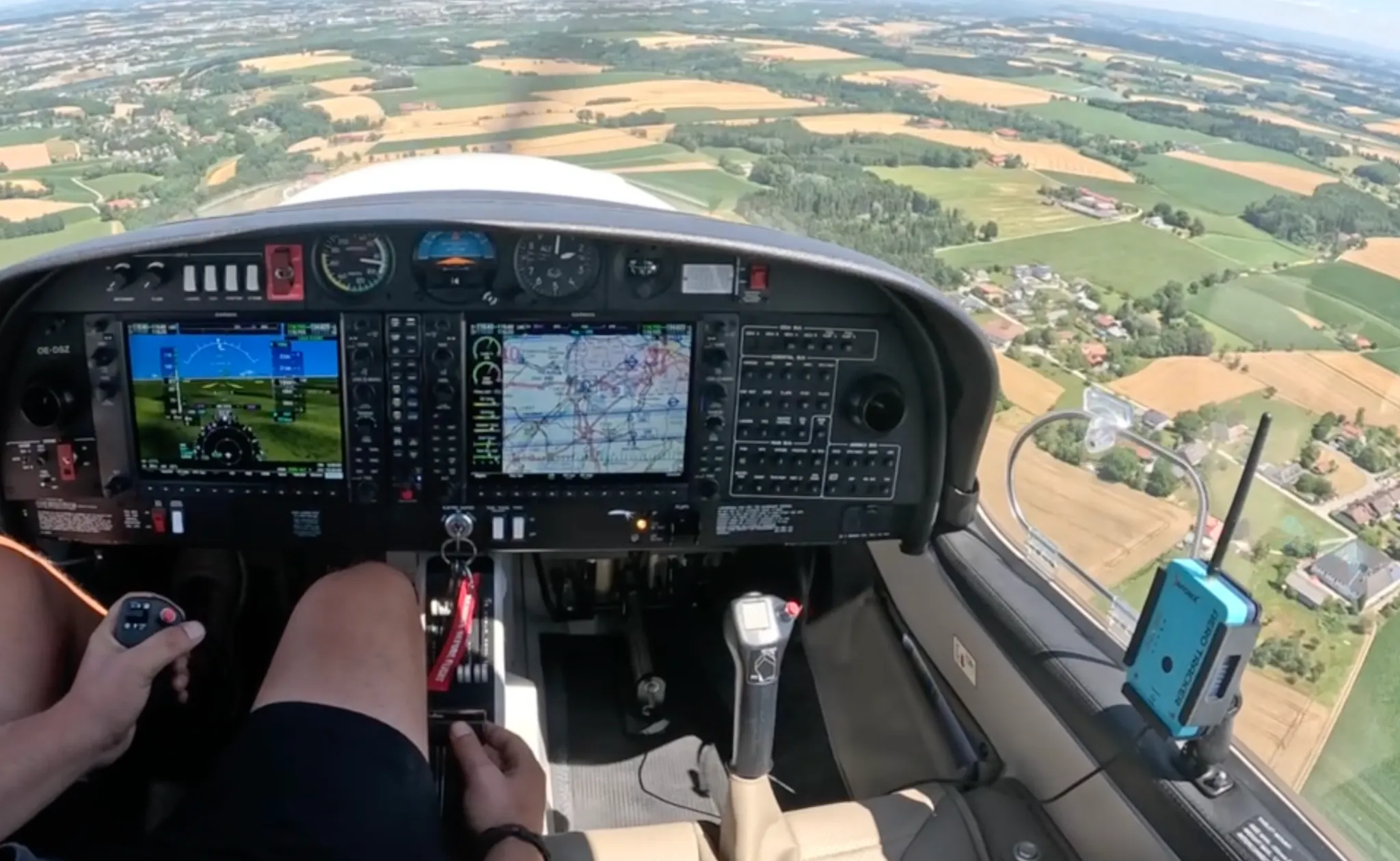
Der AeroTracker wird über eine GoPro-Halterung befestigt, die in der DA40NG bereits vorinstalliert ist. SafeSky läuft auf dem iPad Pro und leitet die Verkehrsinformationen an SkyDemon weiter, das auf demselben iPad Pro läuft.Links
Kaufen: avionix-shop.eu/product/14989526/aero-tracker Dokumentation und FAQ: docs.safesky.app/books/aero-trackerAlthough the DA40NG is equipped with a full Traffic Advisory System (TAS), FLARM is widely used in Austria (and other European countries), mostly by gliders. A TAS only sees aircraft with a transponder, so a large share of the gliders, ultralights and paragliders around you will never appear on it.
This is where the AeroTracker comes in. In combination with my primary flight iPad, it is the best device you can get for detecting FLARM/ADSB and other low-visibility traffic. Of all the devices I’ve tested, the AeroTracker delivers by far the best results, and its LTE connectivity is exceptional, even at high altitudes.
Compare to PowerFLARM
I also tried the PowerFLARM Flex but was not happy with it at all. I used both devices in parallel (and also one at a time, to make sure they didn’t interfere with each other). On multiple occasions, the PowerFLARM either completely missed other aircraft or failed to update, and its overall coverage and range were unsatisfying. So far, the AeroTracker has never missed an ADS-B aircraft that the integrated TAS has shown.What the AeroTracker Does
The AeroTracker is a small, portable eConspicuity device. It does two jobs: it makes you visible to other airspace users, and it shows you who else is around. It does this through two independent layers that complement each other.Air-to-air (direct radio, no network required)
Receives: ADS-B, Mode S, and optionally FLARM Transmits and receives: ADS-L, OGN and FANET Mode S targets have no position data, so they are shown without a bearing, with distance estimated from signal strength FLARM reception directly from other aircraft requires an optional software licenseLTE (via the built-in SIM card and the SafeSky network)
Adds traffic from more than 30 sources, including SafeSky users, FLARM (via ground stations), Mode S via multilateration (MLAT), PilotAware, navigation apps, paraglider devices and drones Requires a SafeSky subscription If the iPad also has a mobile connection, SafeSky merges both data streams for extra coverage and redundancy The device is compliant with EASA’s ADS-L standard, the emerging European standard for eConspicuity in uncontrolled airspace.Hardware
Battery version: 4,000 mAh battery, about 10 hours of runtime Master-On version: no battery; powered via USB-C (5–15 V) and switches on/off with aircraft power Price: from about €750–860 (excl. VAT), depending on version and whether the FLARM license is includedSetup
The AeroTracker is attached via a GoPro mount, which comes pre-installed in the DA40NG. SafeSky runs on the iPad Pro and forwards traffic information to SkyDemon, running on the same iPad Pro.Links
Where to buy: avionix-shop.eu/product/14989526/aero-tracker Documentation and FAQ: docs.safesky.app/books/aero-tracker🌐 Übersetzt aus dem Englischen ·